
Sources checked November 14, 2026.
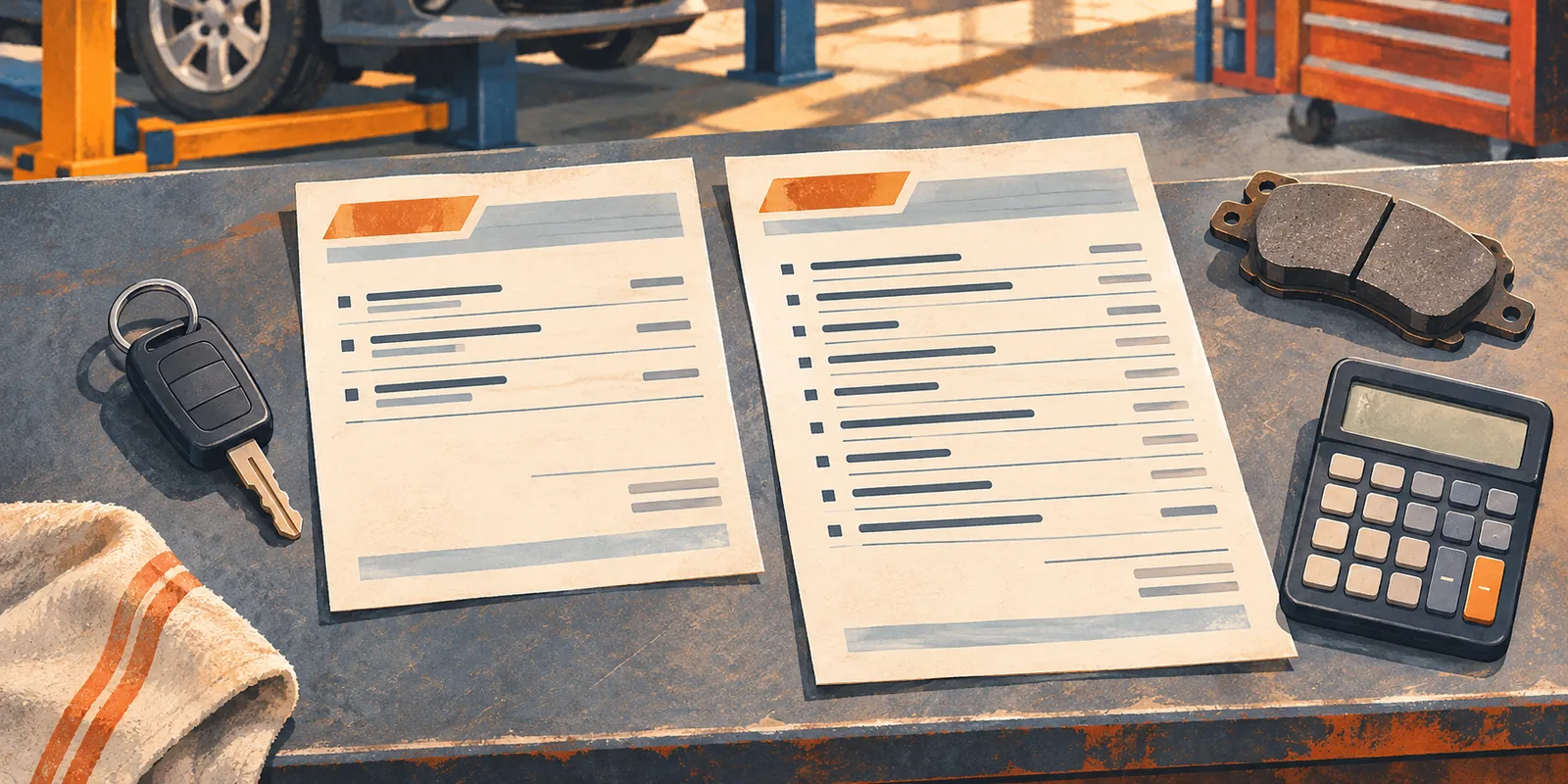
A customer sends a cheaper estimate from another shop and asks you to match it. Before changing your price, give the service advisor a way to compare what each proposal actually covers.
For an independent repair shop, this is a record-keeping problem as much as a sales conversation. The diagnosis, proposed parts, labor, exclusions and customer decision should remain understandable to the next person who opens the job.
Start from your own findings
Identify the complaint and evidence behind your recommendation. An estimate for an investigation cannot be compared directly with a price for a confirmed repair. If you have not inspected the vehicle, say which assumptions your price depends on.
The FTC recommends written estimates and second opinions for expensive or complicated work. Treat a customer’s request to compare as a normal decision, rather than proof that another business has done something wrong.
Your advisor should be able to point to the finding supporting each proposed operation. If the reason is missing, return the question to the technician before sending a confident explanation.
Use the same comparison headings every time
Build a small checklist into your estimate review:
- Scope: component, vehicle location and work included.
- Parts: specification, proposed brand or class, and new or remanufactured status where relevant.
- Labor: the operations covered and how the charge is calculated.
- Related work: setup, programming, alignment or checks where needed for that vehicle.
- Total: applicable taxes and disclosed additional charges.
- Terms: warranty, exclusions, validity and the approval step.
Not every repair requires every listed operation. Explain why something is included rather than implying that a longer estimate is automatically better.
Show differences without criticising the other shop
Suppose your brake proposal includes discs and pads, while the other document lists pads and leaves disc assessment until removal. Your response can identify that difference and explain the measurements behind your own recommendation.
Do not state that the other shop will definitely add charges or fit unsuitable parts when its document does not establish that. Mark an unclear item as a question. If you offer another option, issue a revised estimate with its own scope instead of editing an old message informally.
Keep the earlier version available so the advisor, technician and customer can follow the change.
Record the decision against the agreed version
Write down the work accepted, any work declined or deferred, and the customer contact used. Approval for diagnosis does not automatically describe approval for the proposed repair.
For a California business, BAR explains local estimate and authorization requirements. Other states have their own rules. Use the requirements applicable to your shop when defining records, disclosures and approval procedures.
Move the job’s status to reflect what is actually waiting: customer decision, parts or workshop work. A quote sent is not the same event as a quote accepted.
Connect the estimate to invoicing
HoodHero’s web workspace links quotes to jobs and supports creating an invoice from an accepted quote. The document workflow is useful for keeping approved scope with the paperwork; your team still needs to record the real decision and check the final amounts.
At collection, the invoice should be easy to reconcile with accepted work and later approvals. Retain the service-record handover as the final step. A price conversation is easier to defend when the entire job tells the same story.